EVO ICL vs. LASIK: What’s the Difference and Which Is Right for You?
Medically reviewed by Dr. Brad Snead
ICL surgery and LASIK are two of the most effective vision correction procedures available today. Both are designed to reduce or eliminate the need for glasses or contact lenses. While they achieve similar outcomes, they work in very different ways.
LASIK improves vision by using a laser to reshape the cornea, allowing light to focus properly on the retina. On the other hand, EVO ICL corrects vision by placing a thin, biocompatible lens inside the eye without removing corneal tissue.
Both procedures are safe, widely performed and have helped countless patients achieve clearer vision. However, those seeking vision correction options are still left wondering, EVO ICL vs. LASIK, which is better? The right option depends on your eye structure, prescription, overall eye health and long-term vision goals.
Understanding the differences between EVO ICL and LASIK can help you make a more informed decision about your vision correction options.
What Is the Difference Between LASIK and ICL Surgery?
The primary difference comes down to how eye doctors correct vision with each procedure. LASIK reshapes the cornea using a laser, while ICL surgery improves vision by placing a lens inside the eye.
LASIK is a permanent procedure, as the change to the shape of the cornea can’t be reversed. ICL surgery doesn’t alter the cornea. Instead, it works by adding a lens that enhances the eye’s natural focusing ability.
Because of this, ICL offers more flexibility, as the lens can be removed or replaced if needed.
EVO ICL vs. LASIK Overview
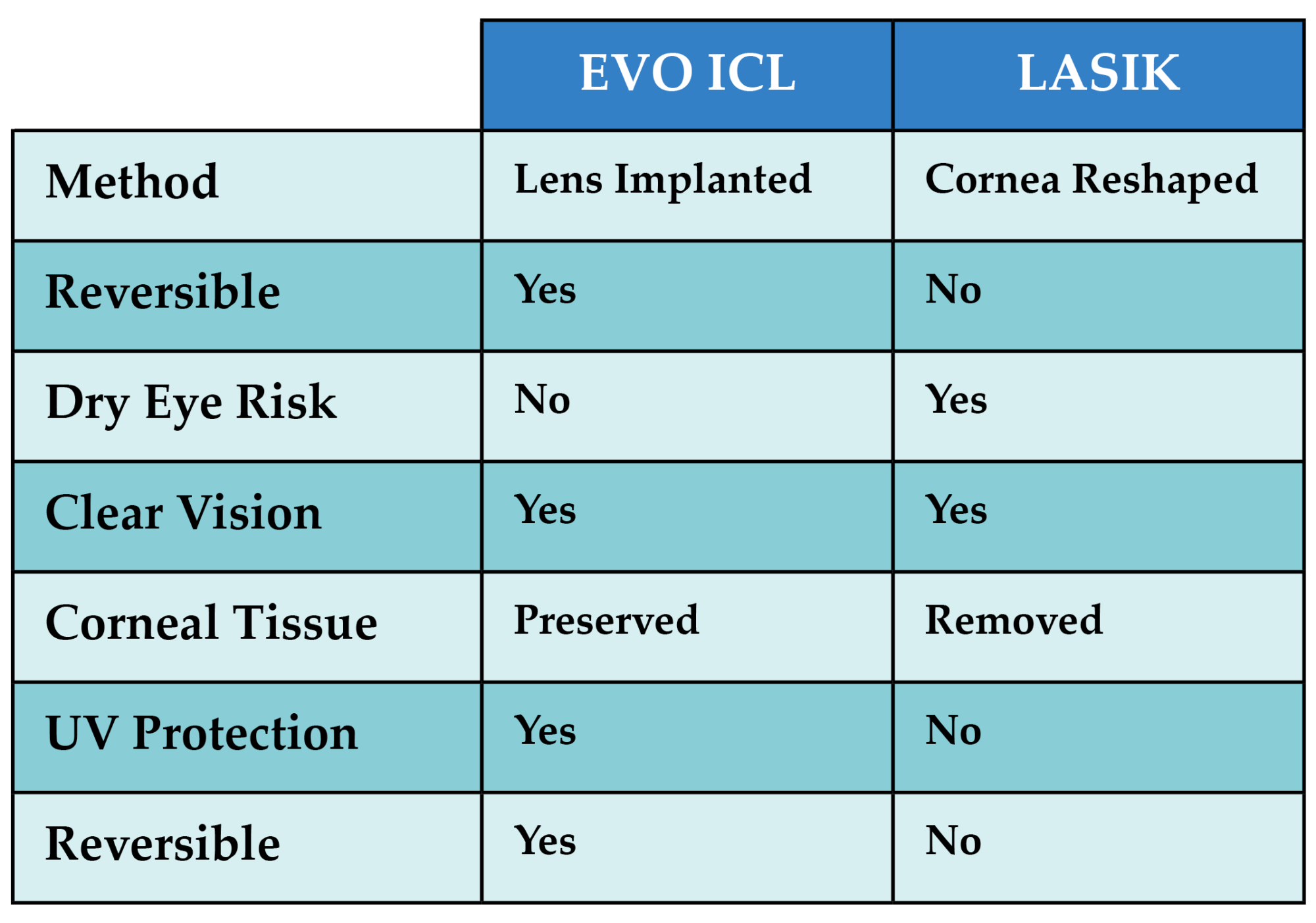
As the table below shows, the key differences between EVO ICL and LASIK come down to how each procedure treats the eye and a few lifestyle considerations. These distinctions influence factors like reversibility, comfort and how your eyes respond after the procedure.
Benefits of EVO ICL vs. LASIK
EVO ICL offers several advantages for patients seeking vision correction without permanently altering their eye structure. Because the procedure works by adding a lens rather than reshaping the cornea, it provides a different approach to improving clarity.
One of the most significant benefits of ICL surgery is its reversibility. Your ophthalmologist can remove or replace the lens, if needed, offering long-term flexibility that LASIK doesn’t provide. It also preserves corneal tissue, which is an important factor for patients with thin corneas or those who want to avoid permanent changes to the eye.
Another difference is the range of prescriptions it can treat. EVO ICL can correct higher levels of nearsightedness than LASIK, making it a strong option for those who don’t qualify for other procedures. ICLs also offer more eye comfort as they don’t cause dry eye. This factor makes it a more attractive option for those already experiencing dry eye discomfort or who are concerned about it. Additionally, the EVO ICL includes built-in UV protection, adding an extra layer of benefit beyond vision correction.
Together, these factors make ICL surgery a compelling option for patients looking for a more flexible LASIK alternative.
When LASIK May Be a Better Option
Patients with sufficient corneal thickness who are seeking mild-to-moderate vision correction may prefer LASIK. Because this procedure reshapes the cornea, doctors typically recommend it only for individuals whose eye structure can safely support it.
Recovery timelines also play a factor when considering LASIK vs. ICL surgery. Patients who want the quickest possible recovery may opt for LASIK. This is because most patients can return to their daily routines, except for heavy lifting, within a day. This makes LASIK a more convenient option for those with busy schedules.
For the right candidate, LASIK remains a safe and effective procedure with a long track record of success. A comprehensive eye exam is the best way to determine whether LASIK or ICL surgery is the more appropriate choice for you.
Can You Have ICL After LASIK?
Yes, it may be possible to have ICL surgery after LASIK. Eligibility depends on factors such as your current prescription, corneal thickness and overall eye health.
An ophthalmologist will perform a comprehensive evaluation to determine whether ICL is a safe and appropriate option based on your individual eye structure and vision needs.
Is ICL a Better Option Than LASIK?
Both procedures are safe and effective, and each is better suited for different situations.
EVO ICL may be better than LASIK for patients with higher levels of nearsightedness, thin corneas or chronic dry eye. Meanwhile, LASIK could be a better fit for those seeking a speedier recovery or those with only mild-to-moderate prescriptions.
As with any vision correction procedure, it’s best to get a professional recommendation from your doctor following a full evaluation.