Modern Cataract Surgery Designed for the Clearest Vision Possible
Ready to be less dependent on glasses and free to see more clearly driving, golfing, reading, gardening and watching TV? Advanced laser technology and premium lens options can set you free.
Get a FREE Cataract Screening this month at any Snead Eye Group location.
Call to Schedule a Free Cataract Screening or an Eye Appointment (239) 936-8686

Imagine Seeing Everyday Moments Clearly Without Relying on Glasses
More than 4 million cataract surgeries are performed every year in the United States. It’s widely regarded as one of the safest major surgical procedures performed today. And with today’s laser-surgery assisted procedures and the latest lens technology available at Snead Eye Group, you will have the best vision possible.
Imagine:
- Seeing better near, intermediate and far distances,
- Improved driving confidence,
- Improved night vision,
- And best of all, freedom from multiple glasses.
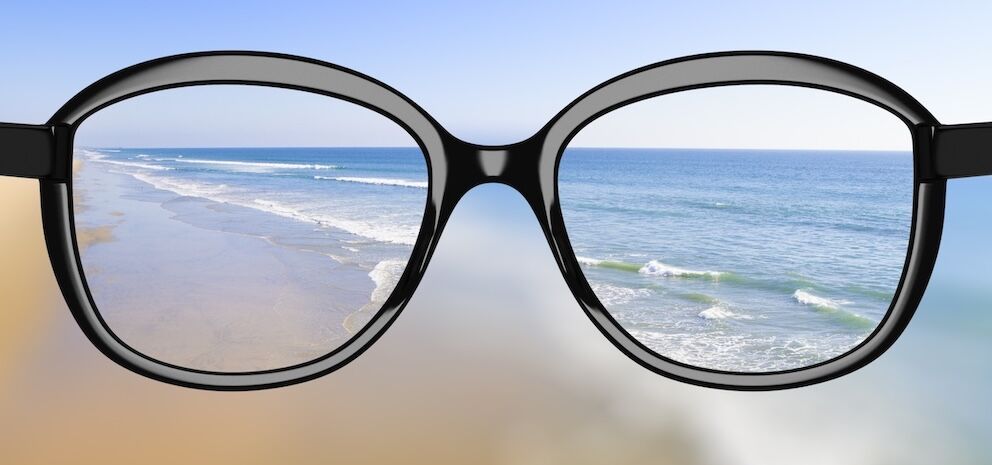
8 Signs You Have Cataracts
Cataracts develop gradually, clouding the eye’s natural lens and making it harder to see clearly. Cloudy lenses distort light as it enters the eyes, leading to these common symptoms:
- Blurred vision
- Dulled color vision
- Sensitivity to bright light
- Poor night vision
- Glare from the sun, headlights and other light sources
- Double vision
- Frequently changing eyewear prescription
- Noticeably cloudy eyes
As the condition progresses, everyday activities, such as reading, driving or even recognizing faces, become more difficult. Vision loses sharpness and detail, creating a constant haze that affects your independence and confidence.
Snead offers a Personalized Approach to Premium Lens Selection Based on Your Needs
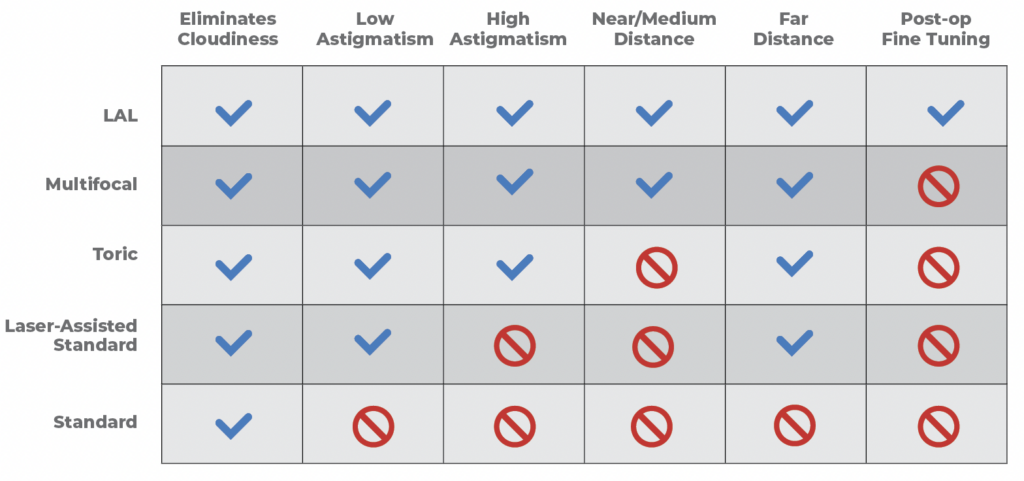
Differences Between Premium Lens Options

Light-Adjustable Lenses for Customization After Cataract Surgery
The Light Adjustable Lens (LAL) is an innovative intraocular lens that is customizable after cataract surgery. While standard lenses have a fixed prescription, the LAL allows your ophthalmologist to fine-tune your vision once your eyes have healed by using a series of light treatments. These non-invasive adjustments help achieve your best possible vision based on your real-world experience. Patients who choose LAL are more likely to reach 20/20 vision without glasses compared to standard options. The Light Adjustable Lens is FDA-approved and ideal for individuals with astigmatism who want the most personalized visual outcome available today.

Multifocal Lenses for Clear Near, Intermediate and Distance Vision
Presbyopia is a condition that causes near vision to decrease as we age, making it difficult to see things up close. Multifocal lenses are designed to combat the effects of presbyopia for clear distance vision plus a full range of intermediate and near vision, reducing the need for corrective lenses or even reading glasses. Multifocal lenses are for individuals who desire the least amount of dependency on glasses after cataract surgery in Naples and Fort Myers. These FDA-approved lenses give patients clear vision.

Toric Lenses for Distance Vision and Astigmatism Correction
Toric or astigmatic lenses are for individuals who desire better distance vision and correction of their astigmatism. Astigmatism is when the eye is longer or shaped like a football rather than a basketball. Images become distorted as light rays are prevented from meeting at a common focal point. Quite common, astigmatism can be corrected with intraocular lenses and limbal relaxing incisions performed with the LenSx® laser during cataract surgery in Fort Myers and Naples, FL.
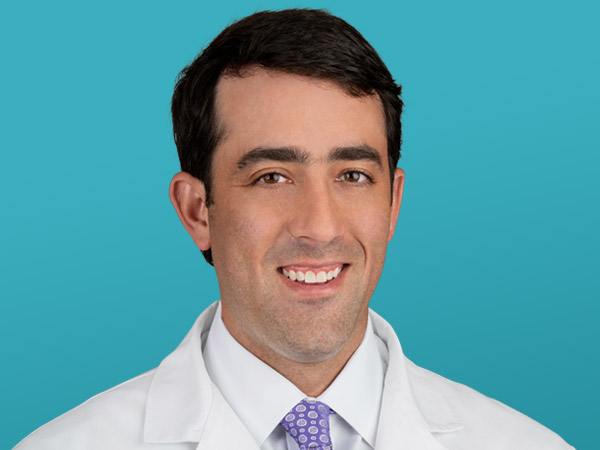
Meet Your Cataract Surgery Specialist
Brad A. Snead, MD, MBA, FACS Board-Certified Ophthalmologist, Medical Director
Choosing the right eye care provider is paramount for achieving optimal outcomes in cataract surgery. Dr. Brad Snead is a Board-Certified Ophthalmologist in Southwest Florida. With more than two decades of experience in ophthalmology, Dr. Snead has replaced tens of thousands cataract plagued eyes with new lenses and has 100’s of 5-star reviews. His dedication to patients eye health coupled with his meticulous precision means patients are thrilled with their outcomes. Many local optometrists only refer their patients to Dr. Snead because they see the great results post operatively.
Dr. Snead brings a wealth of knowledge and expertise to every patient interaction. His specialized training ensures that you get the highest standard of care that’s tailored to your unique needs.
Click to Call and Speak with a Member of our Team, Schedule a Free Cataract Screening or an Eye Appointment
(239) 936-8686
 The Cataract Appointments and Consultation Process
Step 1: Free Cataract Screening
This usually starts during a regular eye exam or a quick check-up. Your eye doctor does basic tests like checking how well you read an eye chart, examining the front of your eye with a slit lamp, and maybe a non-dilated view to spot early signs of lens clouding or other issues that might point to cataracts. It’s a preliminary step to decide if more detailed testing makes sense.
Step 2: Full Cataract Evaluation (Consultation)
If the screening suggests cataracts could be affecting your vision, you’ll come back (or stay longer) for a complete evaluation. This appointment often takes 1–3 hours and includes:
- Reviewing your medical history and any vision complaints.
- Measuring your visual acuity (eye chart test).
- A slit-lamp exam to closely inspect the lens for clouding.
- Dilating your pupils with drops so the doctor can get a clear look at the lens and the back of the eye (retina).
- Checking eye pressure and glare sensitivity, and performing precise measurements of your eye’s shape and length to calculate lens implant options if surgery is needed.
The goal here is to confirm whether the cataracts are significant enough to affect daily life and whether surgery is the right next step.
Step 3: Meeting with the Patient Advisor
Once the evaluation confirms the presence of visually significant cataracts, you sit down with a patient advisor (sometimes called a refractive counselor). They talk through your lifestyle, what you do every day, how much you drive at night, read, use a computer, or want to cut back on glasses. Then they explain the available options, from standard lenses to premium ones like multifocal, extended depth-of-focus (e.g., Vivity), trifocal (e.g., PanOptix), or toric for astigmatism correction. This is your chance to ask questions and decide what best fits your goals.
Step 4: Scheduling and Having Surgery
After you and the surgeon agree on the plan, surgery gets scheduled for one eye first (usually 2 weeks before the second eye). It’s an outpatient procedure that takes about 10–20 minutes per eye. You’ll get numbing drops (you’re awake but comfortable), a tiny incision is made, the cloudy lens is gently broken up and removed, and your chosen artificial lens is placed. You go home the same day with a protective shield and eye drops.
Step 5: Day-After Post-Op Check
The next day (or very soon after), you return for a quick post-operative visit. The doctor checks how the eye is healing, measures your vision and intraocular pressure, ensures everything looks good, and provides instructions for the recovery period. This helps confirm the first eye is on track before moving to the second one.
This step-by-step approach keeps things safe, lets each eye heal properly, and gives you the best possible outcome.
Click to Call and Speak with a Member of our Team, Schedule a Free Cataract Screening or an Eye Appointment
(239) 936-8686
 Financing & Insurance
At Snead Eye Group, we make premium cataract surgery accessible with clear payment options. Medicare covers the basic cataract surgery procedure, including a standard monofocal intraocular lens, and our friendly staff will verify your specific benefits upfront to explain exactly what’s covered and any copays or deductible.
The cost of cataract surgery varies based on the type of lens you choose. Many patients choose to finance their procedure because it allows them to select the lens option that best supports their lifestyle, including premium lenses that provide a higher level of visual clarity and can reduce dependency on glasses.
For premium lenses such as multifocal, extended-depth-of-focus (e.g., Vivity), trifocal (e.g., PanOptix), or toric options that can reduce or eliminate your need for glasses, Medicare does not cover the upgrade cost. You’ll pay that portion out of pocket, but we offer flexible ways to manage it.
A lot of folks go with CareCredit. It’s super easy to apply for. You can get the best vision possible for as little as $270 per month when financing with CareCredit. This flexible payment option allows you to prioritize your long-term vision without delay.
We also offer other financing options if CareCredit isn’t the right fit. Just bring it up during your consultation, and we’ll walk you through everything so it feels straightforward and financially stress-free.
Click to Call to Schedule a Free Cataract Screening or an Eye Appointment (239) 936-8686

Expertly Equipped

Our $1 million imaging system provides detection clarity, ensuring vision problems are identified and treated at the earliest stages.
Perfectly Precise

With the expertise of our eye doctors, we provide accurate, targeted treatment to preserve and enhance your vision.
Clearly Caring

It’s our mission to offer compassionate, personalized care. Your eye health is at the heart of everything we do.